
Musikermuseen in Deutschland
 Beethoven-Haus BonnWerner-Egk-Begegnungsstätte DonauwörthGrieg-Begegnungsstätte LeipzigHändel-Haus Halle/S.Johann Adolf Hasse Museum HamburgAdolph-von-Henselt-Archiv SchwabachHindemith Kabinett FrankfurtHumperdinck-HausKomponistenQuartier HamburgJ.-M.-Kraus-Gedenkstätte BuchenGebrüder-Lachner-Museum Rain am LechCarl-Loewe-Haus LöbejünGustav-Mahler-Museum HamburgMauersberger-Museum GroßrückerswaldeMozarthaus AugsburgCarl-Orff-Museum DießenMax-Reger-Archiv MeiningenReißigerhaus Bad BelzigScharwenka Kulturforum Bad SaarowGottfried-Silbermann-Museum FrauensteinSpohr-Museum KasselRichard-Strauss-Institut PartenkirchenTelemann-Museum HamburgCarl-Maria-von-Weber-Museum DresdenKurt-Weill-Zentrum Dessau
Diese Website wurde gefördert vom Beauftragten der Bundesregierung für Kultur und Medien.
© Copyright 2007-2026 Arbeitsgemeinschaft Musikermuseen in Deutschland
English translation: Helge Goldhahn
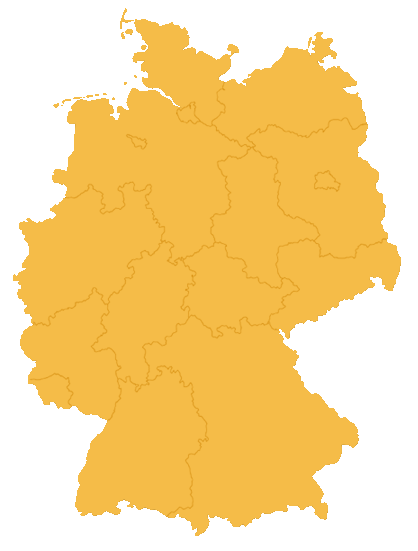

Deutschland verfügt über musikalische Traditionen und Nachlässe von außerordentlichem Wert: Händel, Schütz und Bach, Beethoven, Mendelssohn, Schumann, Brahms und Wagner sind - um nur einige Namen zu nennen - weltweit bekannte und geschätzte Komponisten. Ihr Wirken hat eine einzigartige Musiklandschaft wesentlich mitgeformt.
Zahlreiche Orchester, Chöre und Ensembles, renommierte Musikfestivals und -reihen, Musikerhäuser mit Museen, öffentliche Archive und Bibliotheken, aber auch private Sammlungen bewahren ihr musikalisches Erbe.
Diesen unschätzbaren Fundus gilt es immer wieder neu zu beleben und für die Gegenwart zu erschließen. Den in der Arbeitsgemeinschaft Musikermuseen Deutschlands zuusammengeschlossenen Häusern kommt dabei eine wichtige Rolle zu. In ihnen begegnen wir dem Werk von Musikern und Komponisten, die die Kulturnation Deutschland außerordentlich bereichert haben. Über das individuelle Portrait, über die Vermittlung des einzelnen Œuvres hinaus tragen die Musikermuseen aber auch zur Pflege musikalischer Tradition insgesamt bei. Die vorliegende Broschüre unterstreicht diesen Aspekt der Zusammenschau, und sie lädt zu einer Reise in die Musikgeschichte Deutschlands ein. Ich wünsche diesem Reiseführer regen Gebrauch und eine große Resonanz.
Bernd Neumann, MdB
Staatsminister bei der Bundeskanzlerin
Der Beauftragte der Bundesregierung für Kultur und Medien
Zitat: Vorwort zur Broschüre der Arbeitsgemeinschaft "Musikermuseen in Deutschland", 2007.


